

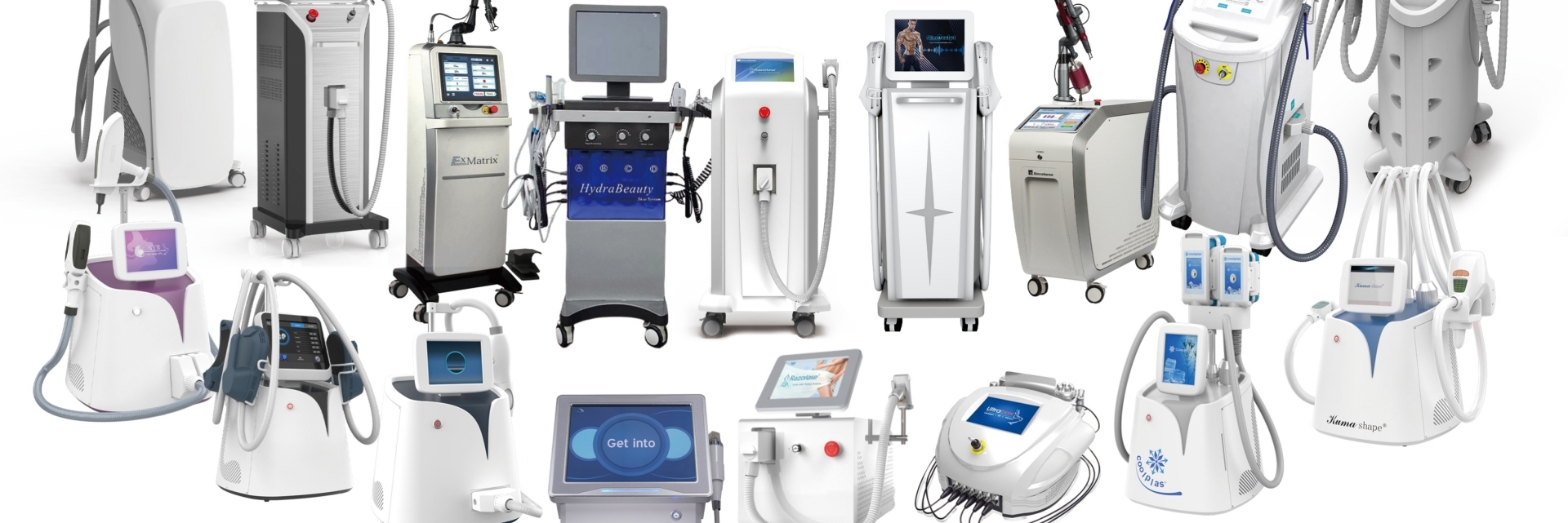


Is diode laser hair removal friendly to darker skin? Why wavelength alone is not the answer
A practical look at the question clinics hear before treating melanin-rich skin.
September 30, 2026 | Technical education for professional users

A three-wavelength Diode Laser gives the operator options, but the treatment still has to fit the skin and hair in front of them.
One question appears again and again in consultations and patient discussions: is diode Laser Hair removal suitable for darker skin? The short answer is yes, it can be. The careful answer is that skin tone changes the margin for error. A device label, even one that lists a longer wavelength, cannot replace an assessment of the customer, the hair, recent sun exposure, the treatment area, and the operator's experience.
This distinction matters because the same pigment is involved on both sides of the treatment. Melanin in the hair helps the laser find the follicle. Epidermal melanin can absorb part of that energy before it reaches the target. The operator is therefore trying to heat the hair structure while limiting unwanted heat at the skin surface.
Why darker skin changes the calculation
The Fitzpatrick skin type is often used as a starting point, but it is not a color chart or a complete treatment plan. It describes how skin tends to react to ultraviolet exposure. Two people placed in the same category may still differ in baseline pigmentation, tanning, medication use, sensitivity, scarring history, hair density, and the amount of contrast between skin and hair.
For this reason, a cautious clinic does not treat every type IV, V, or VI customer with one preset. It looks at the actual skin on the day, asks about sun exposure and previous reactions, and adjusts the plan by area. Underarms, face, legs, and bikini areas can respond differently even on the same person.
Melanin is both the target and the competitor
Diode systems work through selective photothermolysis. Light is absorbed by pigment in the hair shaft and follicle, converted into heat, and delivered for long enough to disrupt future growth. On darker skin, there is more pigment in the epidermis competing for some of the same light. If too much surface heat builds up, the result may be blistering, a burn, or a pigment change such as post-inflammatory hyperpigmentation.

The follicle sits below an epidermis that also contains melanin. Treatment has to manage both structures.
What 755, 808 and 1064 nm really tell us
The Sincoheren three-wavelength diode laser family, including the Razorlase SDL-L product page, combines 755/808/1064 nm options. In general, 755 nm has stronger melanin absorption and is commonly associated with lighter skin and finer hair. The 808 nm band is widely used for many hair and skin combinations. The 1064 nm component is less absorbed by epidermal melanin and is positioned for darker skin and deeper, coarser hair.
That does not make the 1064 nm label a safety certificate. A diode source operating near 1064 nm is also not automatically identical to a long-pulsed solid-state Nd:YAG laser. Beam profile, pulse delivery, power calibration, spot size, cooling, and the proportion of energy assigned to each wavelength can differ between platforms.
A longer wavelength can widen the safety margin for darker skin. It does not remove the need for correct settings, cooling, observation, and training.
Wavelength is only one part of the treatment
Pulse duration controls how quickly energy is delivered. Fluence describes energy per unit area. Spot size changes coverage and can influence how light travels in tissue. Repetition rate affects treatment speed and may contribute to heat build-up if passes overlap. These settings work together, so copying a number from another machine, handpiece, or online video is not a reliable treatment method.
The plan also depends on the hair. Coarse dark hair usually gives the laser a clearer target than fine or lightly pigmented hair. Dense hair can create more local heat. Skin and hair contrast, the body area, treatment interval, and prior response all affect the next session. A strong reaction is not proof of a better result.
Cooling helps, but it cannot rescue a poor plan
The product family describes TEC and sapphire cooling at the handpiece. Sapphire cooling can lower surface temperature, improve comfort, and help protect the epidermis during energy delivery. It does not cancel excessive fluence, poor contact, slow movement, repeated overlap, or treatment over recently tanned skin.
A test spot is useful when the skin type, treatment history, area, or device response calls for extra caution. The clinic should allow enough time to assess the reaction, not judge the setting only by what the skin looks like in the first minute. Documentation makes later decisions safer: record the handpiece, wavelength mode, pulse duration, fluence, spot size, cooling level, passes, and skin response.
The skin on treatment day matters
A recent tan can narrow the treatment window because it adds pigment at the surface. The skin may no longer respond like it did at the first consultation. In that situation, postponing treatment can be more sensible than forcing a session with reduced settings and uncertain benefit.
The clinic should also review medication, active irritation, infection, previous pigment changes, and how the last session healed. Sun protection before and after treatment is part of risk management, especially for customers who are prone to post-treatment dark marks.
How Razorlase SDL-L fits into the discussion
Razorlase SDL-L is presented on the Sincoheren website as a three-wavelength diode laser for professional hair removal. The 755, 808, and 1064 nm combination gives a trained operator more ways to match different hair depths and skin conditions. That flexibility is useful only when the exact supplied configuration is confirmed and the operator works within the current instructions for that unit.
Clinics should verify the actual handpiece, wavelength configuration, calibration, cooling performance, maintenance status, and local treatment requirements before use. A product family description is not a substitute for the manual and does not establish suitability for every customer.
What customers should ask during a consultation
Customers do not need to choose their own settings, but a few direct questions can show whether the clinic has thought through the treatment:
- Which wavelength mode are you proposing for my skin and hair, and why?
- How much experience do you have treating customers with my skin tone?
- Will you perform a test spot or adjust the plan by body area?
- What reaction is expected, and which symptoms require a call to the clinic?
- How will sun exposure, medication, or previous pigment changes affect my plan?
Clear answers are more useful than a promise that one wavelength is safe for everyone. The clinic should explain how it will monitor the skin, protect the surface, and adjust later sessions after seeing the customer's response.
The practical answer
Diode laser hair removal can be appropriate for darker skin, including with a three-wavelength system that offers a 1064 nm component. Friendliness to dark skin is not a permanent property of the machine, though. It comes from a suitable device, conservative and traceable settings, effective cooling, an experienced operator, and a customer whose skin and hair have been properly assessed.
Professional note: This article explains technology and customer communication. It is not a treatment protocol. Operators must follow the instructions for the exact device, local requirements, clinical training, and patient-specific assessment.
Keywords used in this article
diode laser hair removal, darker skin, Razorlase SDL-L, three-wavelength diode laser, 755/808/1064 nm, Fitzpatrick skin type, epidermal melanin, selective photothermolysis, pulse duration, fluence, spot size, sapphire cooling, test spot, post-inflammatory hyperpigmentation